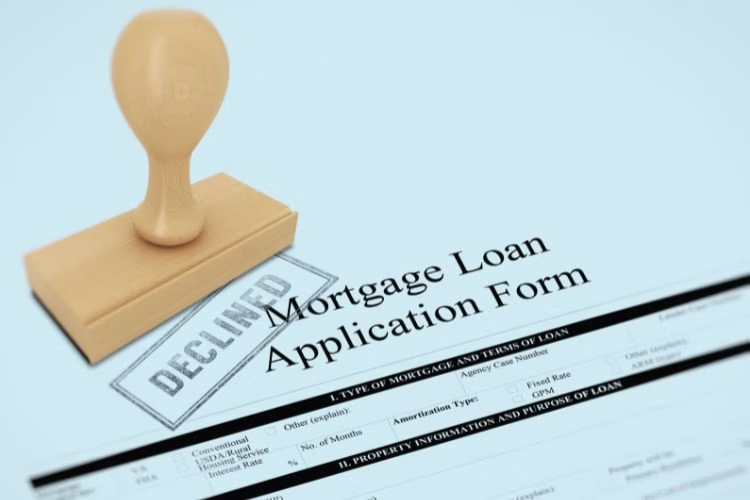
Why My Mortgage Pre-Approval Disappeared When the Boston Heat Wave Hit
Daniel O'Brien
I was three days from closing on my first house in Roslindale when the underwriter called. "We need to talk about your utility costs," she said. My heart stopped. I thought she was going to tell me the rate had gone up. Or that my credit score had dropped. Or that the appraisal had come in low. But it was worse. "Your debt-to-income ratio is now 38%," she said. "Our limit is 36%. We can't approve the loan." I asked what changed. "Your electric bill," she said. "You submitted a new statement. It's $280. The estimate we used was $120. The difference pushes you over." I hung up the phone and stared at the wall for ten minutes. The house I had been about to buy. The house I had inspected. The house I had dreamed about. Gone. Because of an electric bill. Because of a heat wave. Because of a climate that the mortgage industry refuses to acknowledge.
I've been saving for this house for six years. I'm thirty-two. I work in IT. I make $78,000 a year. I saved $45,000 for a down payment. I have no credit card debt. I have a 740 credit score. I am, by every traditional measure, a perfect borrower. And I was perfect in March when I got pre-approved. The mortgage calculator on the bank's website said I could afford $320,000. I found a house for $295,000. A little bungalow in Roslindale. Built in 1950. No central air. Window units. I didn't think that mattered. I thought Boston was mild. I thought window units were fine. I thought the electric bill would be manageable. Then July came. And the heat came. And Boston had seven consecutive days over 90 degrees. And my rented apartment's electric bill hit $280. And I submitted that bill to the underwriter because they asked for "recent utility statements." And that bill killed my mortgage.
Here's what the mortgage calculators don't tell you. They ask for your income. They ask for your debts. They ask for your down payment. They ask for the interest rate. They do not ask for the climate. They do not ask for your cooling costs. They do not ask for the insulation in your house. They do not ask for the age of your windows. They use a standard utility estimate. In Boston, that estimate is $120 for electricity. In a normal summer, that might be accurate. In a heat wave summer, it's a joke. My $280 bill was not an anomaly. It was the new normal. And the new normal doesn't fit in the mortgage industry's box.
I called my mortgage broker. He was sympathetic. He had seen this before. "The underwriters are getting stricter about utility costs," he said. "Especially in the summer. Especially with heat waves. They're seeing more defaults from people who can't afford both the mortgage and the AC." I asked if there was anything I could do. He suggested I find a house with central air. Or better insulation. Or a lower price. Or I could wait until winter, when the utility bills are lower, and resubmit. Wait until winter. Six months. Six months of renting. Six months of saving. Six months of watching house prices go up while I wait for the climate to cool down enough to get a mortgage. The absurdity was not lost on me.
The thing that really gets me is that the house I was buying was perfect. Small. Efficient. Close to the T. In a neighborhood I loved. But it was built in 1950. No insulation. Single-pane windows. A roof that absorbs heat like a sponge. The seller had lived there for thirty years. She told me her average electric bill was $90. But that was before the heat waves. Before the climate changed. Before Boston summers became something that requires central air. Her $90 bill was from a different era. An era that doesn't exist anymore. And I was about to buy a house based on her outdated numbers. And the bank was about to lend me money based on their outdated estimates. And we were all pretending that the past was the future. Until the underwriter looked at my $280 bill and pulled the plug.
I started looking at other houses. Houses with central air. Houses with new insulation. Houses with energy-efficient windows. The prices were higher. $350,000 instead of $295,000. But the utility bills were lower. $150 instead of $280. The mortgage payment would be higher. But the total monthly cost would be about the same. Or lower. I ran the numbers. A $350,000 house with $150 utilities costs about $2,100 a month. The $295,000 house with $280 utilities costs about $2,050 a month. The difference is $50. Fifty dollars. For a better house. A more efficient house. A house that won't cook me in the summer. But I can't afford the $350,000 house because the mortgage calculator says I can only afford $320,000. Because the calculator doesn't account for utility savings. It only accounts for the purchase price. It's backwards. It's broken. And it's keeping me from buying a house that I could actually afford.
I started talking to other first-time buyers. The woman in my office, who was buying in Dorchester, had the same problem. Her pre-approval was pulled when her electric bill came in high. The guy in my D&D group, who was buying in Somerville, had to switch lenders because the first one rejected him over utilities. The whole city is dealing with this. The whole region. The whole country. As heat waves become more common, as utility bills spike, as the cost of cooling becomes a major household expense, the mortgage industry is struggling to keep up. They're using old models. Old assumptions. Old calculators. And those old tools are rejecting borrowers who could afford a house if the house were efficient. Or if the climate were stable. Or if the calculator were honest.
I'm not giving up. I'm going to buy a house. I'm going to find a way. Maybe I'll buy the $295,000 house and install central air myself. Maybe I'll find a grant for energy efficiency. Maybe I'll wait until winter and try again. Maybe I'll find a lender who understands that utility costs are not static. That the climate is changing. That a borrower's ability to pay depends on more than just the mortgage payment. That the total cost of homeownership includes the cost of surviving the heat. And that a house without AC in Boston in 2026 is not a bargain. It's a liability.
So here's my advice. If you're buying a house, check the utility bills. Not just one month. All twelve. Ask for summer bills. Ask for winter bills. Calculate the average. Add 20% for climate change. And then run your own affordability calculator. One that includes the real numbers. One that accounts for the heat. One that doesn't pretend that Boston is still the mild city it used to be. Because it's not. And the mortgage industry needs to catch up. Or it's going to keep rejecting perfect borrowers like me. One heat wave at a time.
Anyone else had their mortgage killed by an electric bill? Because I'm starting to think we need a climate-adjusted mortgage calculator. And I'm willing to help build it.
The thing that really broke my heart was watching my partner's face when I told him. We had been planning this for years. We had picked out paint colors. We had measured for furniture. We had talked about which room would be the nursery. And now it was all on hold. Because of an electric bill. Because of a number that the bank didn't like. Because of a climate that had changed faster than the mortgage industry could adapt. He tried to be supportive. "We'll figure it out," he said. But I could see the disappointment in his eyes. The dream of owning a home, of building a life, of having something that was ours. It was slipping away. And the reason was not something we could control. It was the heat. The heat that made our electric bill $280. The heat that made the bank say no. The heat that didn't care about our dreams.
I started looking at the national data. Mortgage denial rates are rising. Not because borrowers are worse. But because the standards are getting stricter. And the standards are getting stricter because lenders are seeing more defaults. And the defaults are happening because of climate costs. The utility bills. The insurance premiums. The repair costs. The adaptation expenses. All of these are eating into the budgets of homeowners. And when the budget breaks, the mortgage breaks. And when the mortgage breaks, the lender loses. So the lenders are tightening. They're raising the bar. They're rejecting borrowers who would have been approved five years ago. Not because those borrowers are riskier. But because the climate has made everyone riskier. And the mortgage calculators haven't caught up. They're still showing the old numbers. The old affordability. The old dream. And the dream is dying in the heat.
I'm not giving up. I'm not surrendering. I'm not letting the climate steal my future. I'm going to keep saving. I'm going to keep looking. I'm going to keep fighting. And I'm going to keep telling my story. Because the more people who know about this, the more pressure there will be to change. To update the calculators. To account for the climate. To recognize that a $280 electric bill is not a personal failure. It's a climate reality. And it needs to be part of the mortgage equation. Because until it is, people like me will keep getting rejected. Keep getting delayed. Keep getting denied the chance to build a life. Because of the heat. Because of a number. Because of a system that refuses to see what's right in front of it.
So here's what I do now. I track everything. The temperatures. The bills. The trends. I build my own models. My own calculators. My own understanding of what I can afford. And I don't trust the bank's numbers. I don't trust the mortgage calculators. I don't trust the system that was built for a world that doesn't exist anymore. I trust the data. I trust the physics. I trust the reality of a warming planet. And I adjust. I adapt. I survive. And I wait. For the system to catch up. For the lenders to wake up. For the climate to break. Or for me to find a way to win anyway. Whichever comes first.